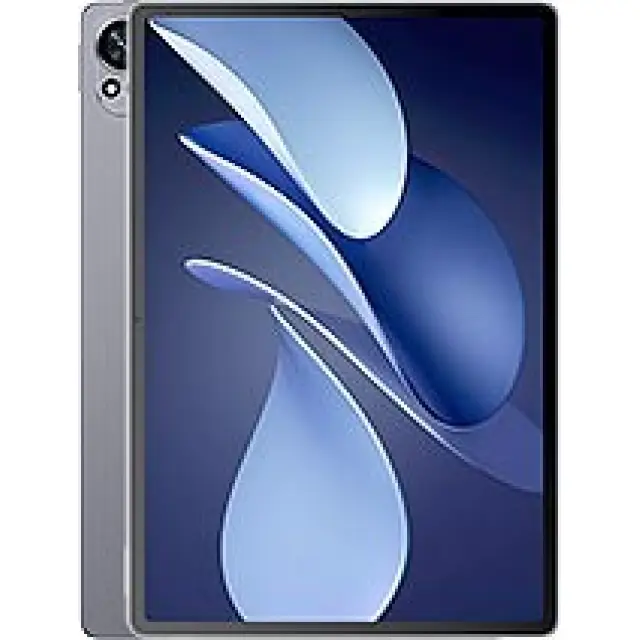
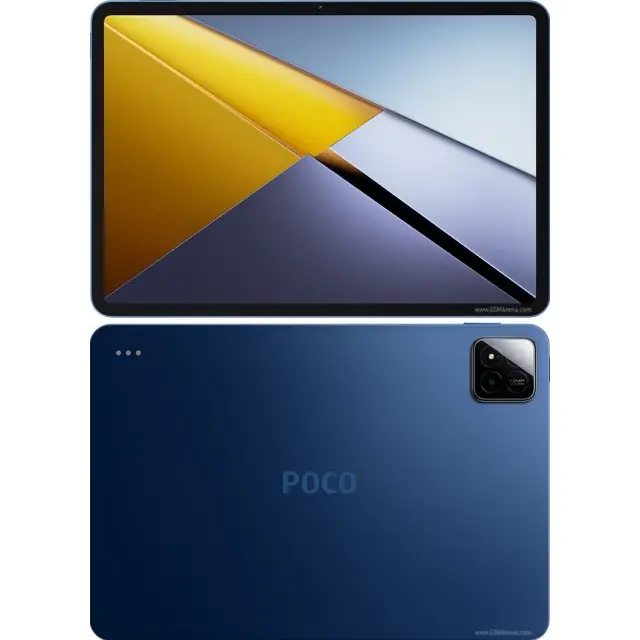
vs
8.7Display8.7
7.0Performance8.0
9.0Battery7.5
8.7Memory & storage7.9
7.6Features7.0
Dimensions
Size comparison
MatePad Air (2025)Poco Pad X1
| MatePad Air (2025) | Poco Pad X1 | Difference | |
|---|---|---|---|
| Height | 270 mm | 251.2 mm | +18.8 mm |
| Width | 183 mm | 173.4 mm | +9.6 mm |
| Thickness | 5.9 mm | 6.2 mm | −0.3 mm |
| Weight | 555 g | 500 g | +55 g |
Drawn to the same scale from the official dimensions (front and side).
Why is MatePad Air (2025) better than Poco Pad X1?
- RAM12 GB vs 8 GB+50%
- Battery capacity10,100 mAh vs 8,850 mAh+14%
- Wired charging66 W vs 45 W+47%
- Rear camera50 MP vs 13 MP3.8×
- Screen size12″ vs 11.2″+7%
- Peak brightness1,000 nits vs 800 nits+25%
- Ultra-wide cameraYes · Poco Pad X1: No
- Wi-Fi standardWi-Fi 7 vs Wi-Fi 6E+8%
- Thickness5.9 mm vs 6.2 mm+5%
Why is Poco Pad X1 better than MatePad Air (2025)?
- AnTuTu score1,003,667 vs 1,647,728+64%
- Geekbench 6 (multi-core)3,979 vs 5,149+29%
- Pixel density279 ppi vs 344 ppi+23%
- CPU frequency2.29 GHz vs 2.8 GHz+22%
- Weight555 g vs 500 g+11%
- Process7 nm vs 4 nm+75%
- Resolution (short side)1,840 px vs 2,136 px+16%
- Resolution (long side)2,800 px vs 3,200 px+14%
- Bluetooth5.2 vs 5.4+4%
- USB version3.1 vs 3.2+3%
Specifications
Side by side
| Design | ||
| Weight | 555 g | 500 g |
| Thickness | 5.9 mm | 6.2 mm |
| Height | 270 mm | 251.2 mm |
| Width | 183 mm | 173.4 mm |
| Frame | Aluminium | Aluminium |
| Back | Aluminium | Aluminium |
| Colours | Pink, Green, White, Gray | Gray, Blue |
| Display | ||
| Screen size | 12″ | 11.2″ |
| Panel | IPS LCD | IPS LCD |
| OLED panel | No | No |
| Resolution (short side) | 1,840 px | 2,136 px |
| Resolution (long side) | 2,800 px | 3,200 px |
| Pixel density | 279 ppi | 344 ppi |
| Refresh rate | 144 Hz | 144 Hz |
| Peak brightness | 1,000 nits | 800 nits |
| Measured brightness | — | 721 nits |
| Screen-to-body ratio | 86.3% | 85.8% |
| HDR | Yes | Yes |
| Performance | ||
| Chipset | HiSilicon Kirin 8020 | Qualcomm SM7675-AB Snapdragon 7+ Gen 3 |
| Chip maker | Kirin | Qualcomm |
| Process | 7 nm | 4 nm |
| CPU cores | 8 | 8 |
| CPU frequency | 2.29 GHz | 2.8 GHz |
| GPU | Maleoon 920 | Adreno 732 |
| AnTuTu score | 1,003,667 | 1,647,728 |
| Geekbench 6 (multi-core) | 3,979 | 5,149 |
| Memory | ||
| RAM | 12 GB | 8 GB |
| Storage (max) | 512 GB | 512 GB |
| Storage (base) | 256 GB | 256 GB |
| Storage type | UFS 3.1 | UFS 4.0 |
| Memory card slot | No | No |
| Battery | ||
| Battery capacity | 10,100 mAh | 8,850 mAh |
| Battery type | Li-Po | Li-Po |
| Wired charging | 66 W | 45 W |
| Charged in 30 min | — | 50% |
| Wireless charging | No | No |
| Connectivity | ||
| Cellular (LTE) | No | No |
| 5G | No | No |
| eSIM | No | No |
| Dual SIM | No | No |
| Wi-Fi standard | Wi-Fi 7 | Wi-Fi 6E |
| Bluetooth | 5.2 | 5.4 |
| USB | USB Type-C 3.1 | USB Type-C 3.2 |
| USB version | 3.1 | 3.2 |
| Video output (USB-C / DisplayPort) | Yes | Yes |
| NFC | No | Yes |
| GPS | No | No |
| Features | ||
| Stylus support | Yes | Yes |
| Stereo speakers | Yes | Yes |
| 3.5 mm headphone jack | No | No |
| Sensors | Accelerometer, gyro, proximity (accessories only) | Accelerometer, gyro, proximity, compass |
| Cameras | ||
| Rear camera | 50 MP | 13 MP |
| Rear camera aperture | f/1.8 | f/2.2 |
| Rear cameras | 2 | 1 |
| Ultra-wide camera | Yes | No |
| Optical stabilisation | No | No |
| Max video | 4K | 4K |
| 4K video frame rate | 30 fps | 30 fps |
| Front camera | 8 MP | 8 MP |
| 4K front-camera video | No | No |
| Software | ||
| OS at launch | HarmonyOS 5.0 | Android 15 |
| Platform | HarmonyOS | Android |
| Interface | — | HyperOS 2 |
| Major OS updates promised | — | 4 |
Related comparisons
 vs
 Lenovo IdeaTab ProvsHuawei MatePad Air (2025)
 vs
Lenovo Tab K12vsHuawei MatePad Air (2025)
8.88.7
 vs
VALE V12XvsHuawei MatePad Air (2025)
 vs
Xiaomi Pad MinivsHuawei MatePad Air (2025)
8.78.7
vs
 Huawei MatePad Air (2025)vsLenovo Legion Y700 (Gen 4)
8.78.8
 vs
Huawei MatePad Air (2026)vsHuawei MatePad Air (2025)
9.08.7