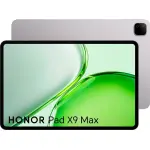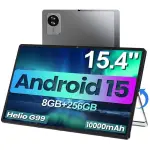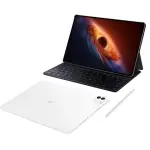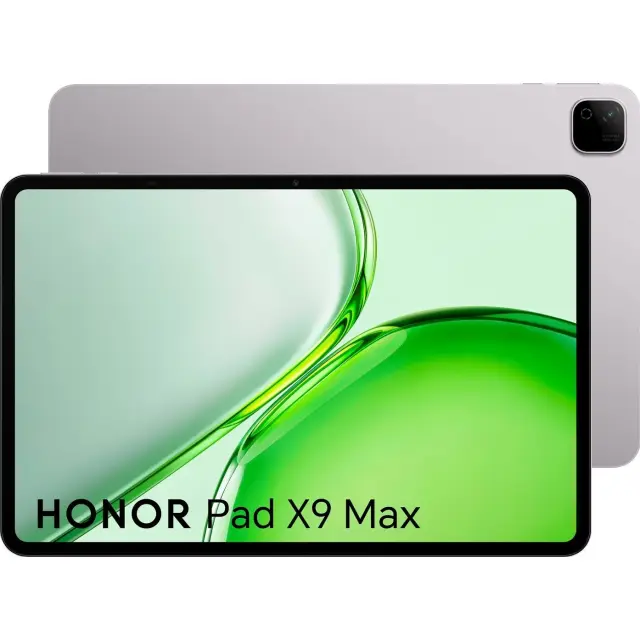
vs
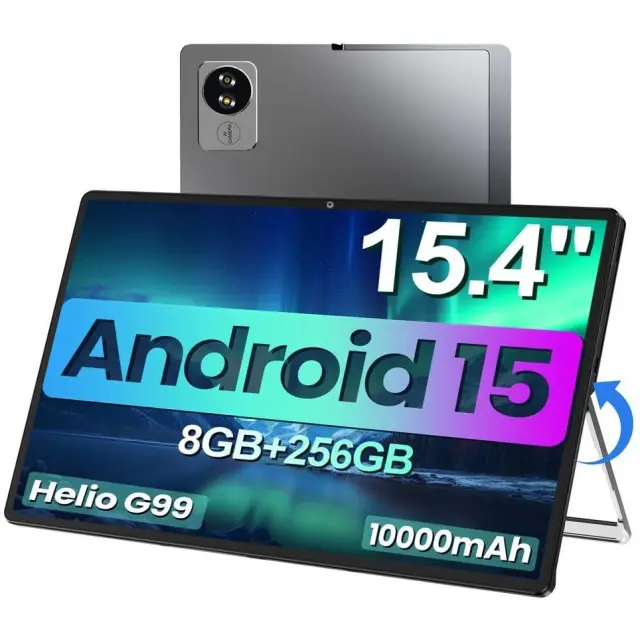
4.1Memory & storage8.0
Why is Pad X9 Max better than Z3?
- Weight618 g vs 1,220 g+97%
- Battery charge cycles1,600 vs 5003.2×
- Endurance per cycle146 h vs 7 h20.9×
- Energy classE vs G
- Repairability classC vs D
Why is Z3 better than Pad X9 Max?
- RAM4 GB vs 8 GB2×
- Storage (max)128 GB vs 256 GB2×
- Screen size13″ vs 15.4″+18%
- Storage (base)128 GB vs 256 GB2×
Specifications
Side by side
| Design | ||
| Weight | 618 g | 1,220 g |
| Thickness | 6.8 mm | — |
| Height | 7 mm | 11 mm |
| Width | 192.7 mm | — |
| Ingress protection | IP40 | IP40 |
| Water resistance (IPx) | IPx0 | IPx0 |
| Colours | Gray | — |
| Display | ||
| Screen size | 13″ | 15.4″ |
| Panel | IPS TFT | — |
| OLED panel | No | No |
| Resolution (short side) | 1,560 px | — |
| Resolution (long side) | 2,500 px | — |
| Pixel density | 228 ppi | — |
| Refresh rate | 120 Hz | — |
| Peak brightness | 700 nits | — |
| Screen-to-body ratio | 85.4% | — |
| Performance | ||
| Chipset | Qualcomm Snapdragon | MediaTek Helio |
| Chip maker | Qualcomm | MediaTek |
| Memory | ||
| RAM | 4 GB | 8 GB |
| Storage (max) | 128 GB | 256 GB |
| Storage (base) | 128 GB | 256 GB |
| Memory card slot | Yes | — |
| Battery | ||
| Battery capacity | 10,100 mAh | — |
| Wired charging | 45 W | — |
| Wireless charging | No | — |
| Connectivity | ||
| Cellular (LTE) | No | No |
| Bluetooth | 5.1 | 5.2 |
| Software | ||
| OS at launch | Android 16 | — |
| Platform | Android | — |
| Interface | MagicOS 10 | — |
| EU label | ||
| Energy class | E | G |
| Battery charge cycles | 1,600 | 500 |
| Endurance per cycle | 146 h | 7 h |
| Repairability class | C | D |
| Drop resistance class | E | E |