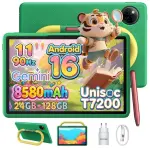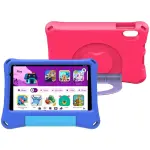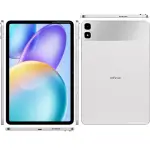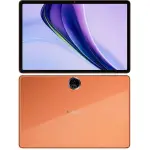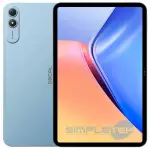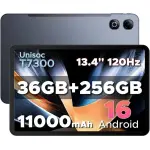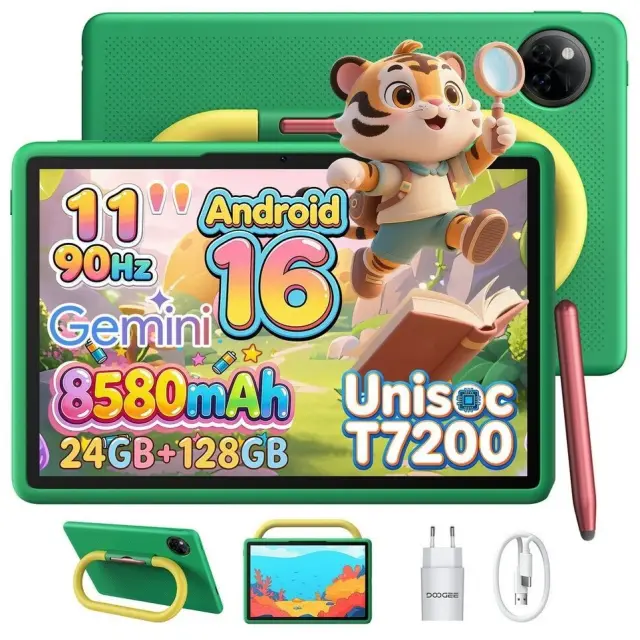

Why is U11 Kid better than N90?
- Weight537 g vs 615 g+15%
- Battery charge cycles1,000 vs 800+25%
Why is N90 better than U11 Kid?
- RAM4 GB vs 8 GB2×
- Screen size11″ vs 12″+9%
- Water resistance (IPx)IPx0 vs IPx4
- Energy classE vs D
- Drop resistance classC vs B
- Endurance per cycle131 h vs 145 h+11%
Specifications
Side by side
| Design | ||
| Weight | 537 g | 615 g |
| Thickness | 7.9 mm | — |
| Height | 8 mm | 8 mm |
| Width | 169.6 mm | — |
| Ingress protection | IP20 | IP44 |
| Water resistance (IPx) | IPx0 | IPx4 |
| Colours | Peach Pink, Sprout Green | — |
| Display | ||
| Screen size | 11″ | 12″ |
| Panel | IPS TFT | — |
| OLED panel | No | No |
| Resolution (short side) | 800 px | — |
| Resolution (long side) | 1,280 px | — |
| Pixel density | 137 ppi | — |
| Refresh rate | 90 Hz | — |
| Peak brightness | 350 nits | — |
| Screen-to-body ratio | 80.5% | — |
| Performance | ||
| Chipset | Unisoc Tiger | — |
| Chip maker | Unisoc | — |
| Memory | ||
| RAM | 4 GB | 8 GB |
| Storage (max) | 128 GB | 128 GB |
| Storage (base) | 128 GB | 128 GB |
| Memory card slot | Yes | — |
| Battery | ||
| Battery capacity | 8,580 mAh | — |
| Wireless charging | No | — |
| Connectivity | ||
| Cellular (LTE) | No | No |
| eSIM | — | No |
| Dual SIM | — | No |
| Bluetooth | 5 | — |
| Software | ||
| OS at launch | Android 15 | — |
| Platform | Android | — |
| EU label | ||
| Energy class | E | D |
| Battery charge cycles | 1,000 | 800 |
| Endurance per cycle | 131 h | 145 h |
| Repairability class | B | B |
| Drop resistance class | C | B |